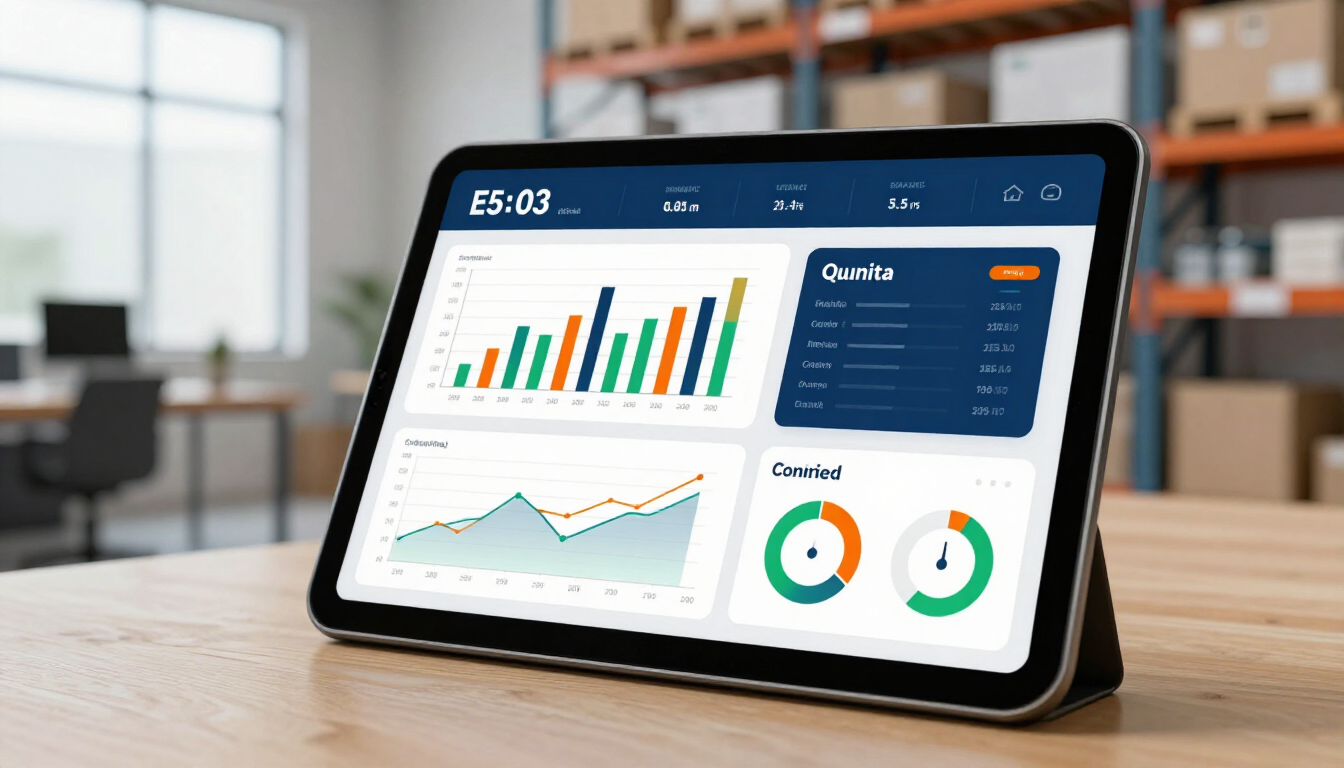



AI Automation ROI: How to Save Time and Boost Profits
AI automation ROI is the measurable financial and operational benefit gained by using artificial intelligence to execute repetitive business tasks. Organizations achieve this by reducing labor costs, eliminating human error, and accelerating response times. Most businesses see significant returns through reclaimed employee capacity and improved lead conversion rates within months of implementation.
What Is AI Automation ROI and Why Does It Matter?
For many business owners, the concept of Artificial Intelligence (AI) often feels like a futuristic luxury rather than a pragmatic investment. However, in the current economic landscape, AI automation has transitioned into a core driver of profitability. ROI, or Return on Investment, in this context isn't just about the money saved; it's about the value created by shifting your most expensive resource, human talent, away from low-value, repetitive tasks toward high-impact strategic initiatives. When you implement AI Automation , you are essentially purchasing time. This time can be reinvested into innovation, customer relationship building, or market expansion. Without automation, businesses often hit a 'growth ceiling' where they cannot scale because their manual processes require too many man-hours to sustain. By breaking this ceiling, AI allows for exponential growth without a linear increase in overhead costs. Understanding ROI helps decision-makers justify the initial setup costs by projecting the long-term savings in hours and the increase in revenue through faster, more accurate operations.
How Does Automation Reduce Operational Costs?
Reducing operational costs is the most immediate way that AI automation impacts the bottom line. Every manual entry, every copy-paste task, and every data reconciliation represents a hidden cost. Consider the 'labor cost per task' metric. If an employee earning $40 per hour spends 5 hours a week manually updating spreadsheets, that is $200 a week, or over $10,000 a year, on a single repetitive process.
AI automation eliminates these costs by:
- Automating data entry across disparate systems like Google Sheets and CRMs.
- Reducing the 'error rate' which often leads to costly rework or lost shipments.
- Streamlining administrative approvals that usually bottleneck projects for days.
- Decreasing the need for seasonal hiring during peak business periods.
- Optimizing resource allocation through predictive maintenance and scheduling.
By leveraging Custom Workflow solutions, businesses can ensure that these cost savings are not just theoretical but baked into their daily operations. The reduction in friction across departments often leads to a more satisfied workforce, further reducing the costs associated with employee turnover and retraining.
Maximizing Efficiency Through CRM and Lead Follow-ups
In the world of sales, speed is the ultimate currency. Statistics consistently show that lead conversion rates drop significantly if a prospect is not contacted within the first five minutes of their inquiry. This is where AI automation delivers some of its highest ROI. Manually monitoring an inbox or a lead form is impossible for a human to do 24/7, but an AI-driven How It Works process can respond instantly. When a potential client fills out a form on your website, an automated flow can instantly qualify that lead, check the sales team's availability, send a personalized introductory email, and even book a meeting on the calendar without any human intervention. This ensures that no opportunities fall through the cracks.
Furthermore, CRM automation ensures that your customer data is always up to date. Instead of sales reps spending their Friday afternoons logging calls and emails, the AI does it in real-time. This provides leadership with accurate, live data to make better business decisions. The ROI here is twofold: you close more deals because you are faster, and your sales team is happier because they are actually selling instead of doing data entry.
Benefits of CRM automation include:
- Instant lead qualification and routing to the right department.
- Automated follow-up sequences that nurture prospects over weeks or months.
- Synchronized data between marketing, sales, and billing platforms.
- Personalized customer communication based on historical interaction data.
- Real-time notification for sales teams when a high-value lead is active.
Why Is Marketing Reporting Automation Critical for Agencies?
For marketing agencies, reporting is often a non-billable nightmare. Account managers can spend dozens of hours every month pulling data from Facebook Ads, Google Ads, LinkedIn, and email platforms to create client reports. This manual process is not only slow but also prone to human error, which can damage client trust. Automation changes the game by pulling all this data into a unified dashboard in real-time. By utilizing our Services , agencies can provide their clients with 24/7 access to their performance metrics.
This delivers ROI by allowing the agency to scale its client base without needing to hire more account managers just to handle the paperwork. It also improves client retention. When clients can see the clear connection between their spend and their results through a professional, automated report, they are more likely to increase their budget. The agency shifts from being a 'service provider' to a 'strategic partner.' Automation also allows for 'anomaly detection.' If an ad campaign suddenly stops performing, the AI can alert the team immediately, preventing thousands of dollars in wasted ad spend, a direct and measurable ROI for the client.
Real-World E-commerce Automation Examples
E-commerce is perhaps the industry most primed for AI ROI. The sheer volume of transactions and customer interactions makes manual management nearly impossible at scale. One of the most common User Cases involves the automation of the order-to-fulfillment cycle. When a customer makes a purchase, AI can instantly verify inventory, update the website to reflect stock levels, send a confirmation email, and trigger the shipping label generation. This reduces the time from order to delivery, leading to higher customer satisfaction and fewer support tickets.
Another high-ROI area is abandoned cart recovery. While simple email triggers have existed for years, AI-driven automation can take this further by analyzing why a customer left and offering a personalized incentive, such as a specific discount or a related product recommendation, at the exact moment they are most likely to return.
Additional e-commerce automation impacts:
- Dynamic pricing based on competitor data and market demand.
- Automated customer support via AI chatbots for common tracking questions.
- Fraud detection systems that flag suspicious transactions before they process.
- Automated review requests sent after a confirmed successful delivery.
- Smart inventory forecasting to prevent overstocking or stockouts.
How Do You Measure the Success of AI Workflows?
To truly understand ROI, you must look beyond the 'cool factor' of AI and focus on hard metrics. Measuring success involves tracking specific Key Performance Indicators (KPIs) before and after implementation. The most common metric is 'Time Saved.' If a process used to take 10 hours a week and now takes 10 minutes, that is a clear win. However, you should also look at 'Throughput.' Are you able to handle 50% more orders with the same staff? Another critical metric is the 'Error Rate.' If automation reduces shipping errors from 2% to 0.1%, the savings in shipping costs and customer refunds can be massive.
Businesses should track:
- Total labor hours reclaimed per month.
- Reduction in customer response time (Mean Time to Respond).
- Increase in lead-to-opportunity conversion percentage.
- Accuracy improvements in financial and inventory reporting.
- Cost per acquisition (CPA) improvements through automated bidding.
By quantifying these numbers, owners can see exactly how the investment in SmartFl8w's automation tools is impacting their bottom line. It turns a 'tech project' into a 'profit center.'
Strategic Steps to Implement AI for ROI
Implementing AI shouldn't be a scattershot approach. To ensure the highest ROI, follow a structured path. Start with an 'Automation Audit.' Identify the tasks that your team dislikes the most, these are usually the most repetitive and error-prone. Once identified, prioritize them based on the potential impact versus the complexity of automation. Always start with a 'Pilot Project.' For many, this is lead follow-up or basic reporting. This allows you to prove the value and get team buy-in before rolling out more complex Custom Workflow solutions across the entire company.
Training is also a vital component. While the AI does the heavy lifting, your team needs to know how to interact with these new systems. This doesn't mean they need to become programmers; they just need to understand how to leverage the data the AI provides. Finally, automation is not a 'set it and forget it' endeavor. Markets change, and so should your workflows. Regular reviews and optimizations ensure that your ROI continues to grow over time as the AI learns more about your business patterns.
Conclusion: Your Path to a Scalable Future
In summary, AI automation is no longer an optional upgrade for businesses looking to remain competitive. By focusing on high-impact areas like CRM management, marketing reporting, and e-commerce fulfillment, companies can realize significant ROI through reclaimed time and reduced operational friction. The key to success lies in choosing the right processes to automate and measuring the outcomes with precision. Whether you are an agency owner looking to scale or a local business in Noumea aiming for efficiency, the path forward is clear: automate the routine to amplify the human.
Key Takeaways:
- AI automation delivers ROI by converting manual labor into strategic capacity.
- Speed to lead is the most significant factor in sales automation profitability.
- Marketing agencies can scale without proportional hiring through automated reporting.
- E-commerce businesses see immediate gains in customer satisfaction and inventory control.
- Success is best measured by tracking time saved and reduction in human error.
Ready to see how automation can transform your business? Book a Free Consultation today and let's build your custom roadmap to growth.