
How to Set Up Email Marketing Automation (2026 Guide)
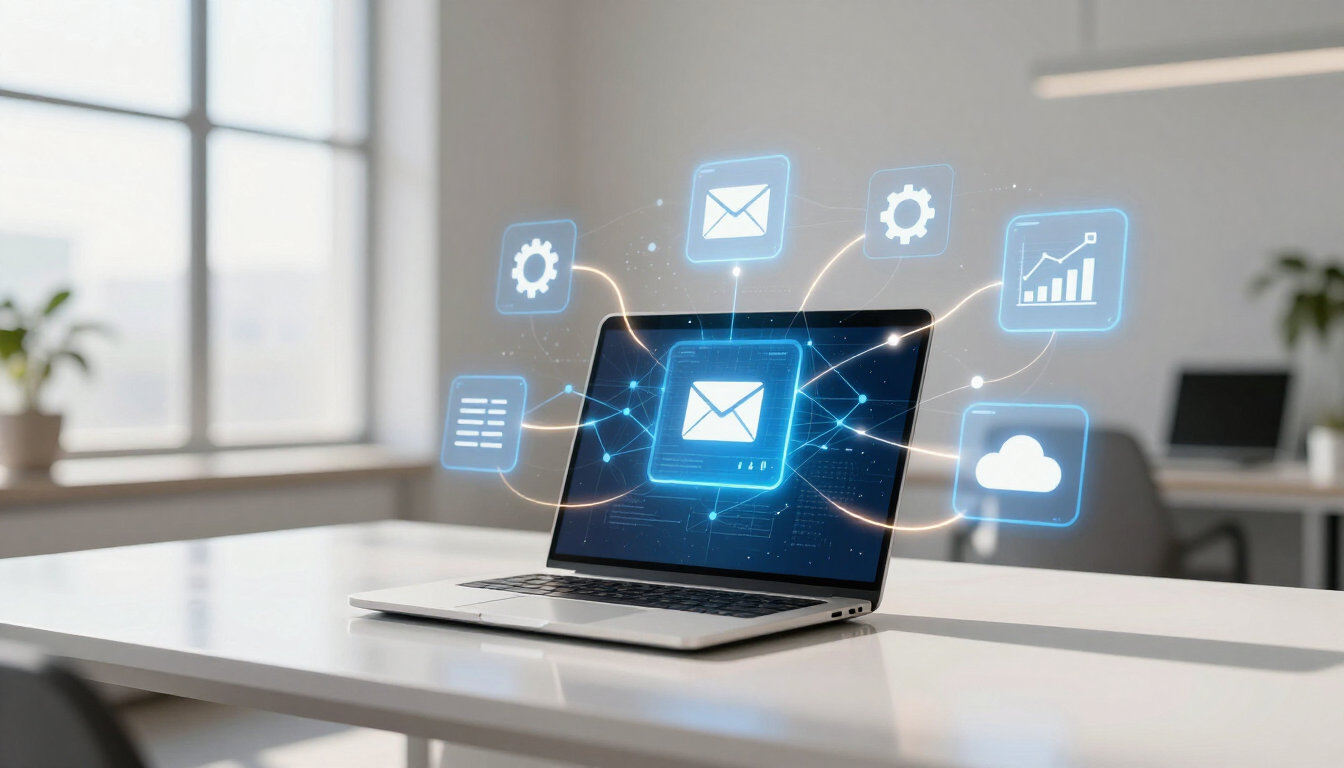
Email marketing automation is a technology-driven strategy that uses software to automatically send targeted, relevant emails to subscribers based on specific triggers or schedules. It allows small businesses to nurture leads, onboard customers, and drive sales consistently without manual intervention, ensuring the right message reaches the right person at the right time.
What is Email Marketing Automation?
At its core, email marketing automation is about replacing repetitive, manual tasks with intelligent systems that work for you 24/7. For a small business owner, time is the most valuable currency. You cannot possibly sit at your computer every time a new lead signs up for your newsletter to send them a "Welcome" message, and you certainly cannot manually track every customer’s journey to send a follow-up 30 days after their first purchase.
Automation bridges this gap. It involves setting up a series of rules or "workflows" that define when an email should be sent. These triggers can be as simple as a sign-up or as complex as a user clicking a specific link on your website but not making a purchase. By leveraging AI Automation , businesses can move beyond basic scheduling into predictive communication that anticipates what a customer needs before they even ask for it.
In 2026, automation isn't just a luxury; it’s the standard. Customers expect immediate gratification and personalized experiences. If someone downloads your whitepaper on a Sunday night, they shouldn't have to wait until Monday morning for a response. Automation ensures that your business stays "awake" even when you are not, providing a seamless brand experience that builds trust from the very first interaction.
The Strategic Benefits for Small Businesses
Transitioning from manual email blasts to automated sequences offers several transformative benefits for small enterprises:
- Consistency in Communication: Automation ensures no lead falls through the cracks. Every prospect receives the same high-quality onboarding or nurturing sequence.
- Higher Conversion Rates: Automated emails often see much higher open and click-through rates because they are sent at the moment of highest intent.
- Scalability: Whether you have 10 subscribers or 10,000, the amount of work required to manage your email marketing remains virtually the same once the system is built.
- Data-Driven Insights: Modern automation platforms provide deep analytics on how users interact with your emails, allowing for continuous refinement.
- Increased Productivity: By offloading follow-ups to a system, your sales team can focus on closing deals rather than chasing cold prospects.
Implementing a Custom Workflow tailored to your specific industry allows you to capture these benefits while maintaining the unique "human touch" that differentiates small businesses from giant corporations. The goal isn't to sound like a robot; it’s to use robots to deliver a more human, timely experience.
How do you set up your first automated campaign?
Setting up your first automation might seem daunting, but it follows a logical path that any business owner can master. The first step is selecting the right platform. Your choice should depend on your current technical stack and your growth goals. Whether you use a dedicated email tool or integrate it within your CRM through Services , the foundational steps remain the same.
- Define Your Goal: Before touching any software, identify what you want the automation to achieve. Is it to welcome new subscribers? To recover abandoned carts? Or perhaps to re-engage customers who haven't bought anything in six months?
- Choose Your Trigger: A trigger is the "if" in your sequence. "If a user signs up for the newsletter," then "send the welcome email." Common triggers include form submissions, page views, specific tag additions, or date-based events like birthdays.
- Map the Journey: Visualize the flow of emails. How many days should pass between the first and second message? What happens if they click a link? What happens if they ignore the email? This mapping process is the blueprint of your success.
- Create the Content: Write your emails with a conversational tone. Focus on providing value rather than just selling. Each email in a sequence should lead naturally to the next, building a narrative that guides the reader toward your desired action.
- Test and Launch: Always send test versions of your automated emails to yourself first. Check links, images, and formatting on both desktop and mobile devices. Once everything is perfect, flip the switch and go live.
Key Components of a Successful Drip Campaign
A drip campaign is a series of pre-written messages sent to customers or prospects over a period of time. These "drips" of information keep your brand top-of-mind. To make these effective, you must balance frequency with value. If you send too many emails, you’ll see a spike in unsubscribes; too few, and you’ll be forgotten.
A classic 5-email nurturing sequence for a lead might look like this:
- Email 1 (Immediate): The Welcome & Delivery. Deliver whatever you promised (a lead magnet or discount) and introduce your brand’s personality.
- Email 2 (Day 2): The Value Add. Share a helpful tip or a "how-to" related to your industry that solves a small problem for the reader.
- Email 3 (Day 4): The Social Proof. Share a success story or a case study that shows how you’ve helped others. This builds credibility.
- Email 4 (Day 6): The Objection Killer. Address common reasons why people hesitate to buy your product or service and provide reassuring answers.
- Email 5 (Day 8): The Soft Pitch. Introduce your main offer or service with a clear call to action (CTA), such as booking a Free Consultation .
Why is audience segmentation essential for success?
Sending the same email to everyone on your list is a recipe for mediocrity. Segmentation is the process of dividing your email list into smaller groups based on specific criteria. This allows you to tailor your messaging so it resonates deeply with each individual. Statistics consistently show that segmented campaigns result in higher engagement and lower churn rates.
You can segment based on several factors:
- Behavioral Data: Did they open your last three emails? Did they click on a specific product link? Those who click are "hotter" leads than those who don't.
- Demographics: Factors like location, age, or job title can significantly change how you frame your offer. A customer in Noumea might need different information than someone in a different region.
- Purchase History: You shouldn't send a "first-time buyer" discount to someone who has been a loyal customer for five years. Instead, send them a VIP reward.
- Engagement Level: Segment your "super-fans" from your "lurkers." Give your fans early access to new products, and try to re-engage your lurkers with a special "we miss you" offer.
Essential Email Automation Best Practices
To ensure your automation efforts yield the highest possible return on investment, you must follow established best practices. Even the most sophisticated automation software cannot compensate for poor strategy or lackluster content.
First and foremost, prioritize your subject lines . The subject line is the gatekeeper of your content. Use curiosity, urgency, or direct benefits to entice the reader to click. However, avoid "clickbait" that doesn't deliver on its promise, as this destroys long-term trust. In 2026, personalization in subject lines goes beyond just using the first name; it involves mentioning specific interests or past actions.
Secondly, optimize for mobile users . More than 60% of emails are now opened on mobile devices. Use single-column layouts, large fonts, and clear buttons that are easy to tap with a thumb. If your email looks cluttered on a smartphone, your conversion rate will plummet regardless of how good the copy is.
Thirdly, monitor your deliverability . If your emails end up in the spam folder, your automation is worthless. Maintain a clean list by regularly removing inactive subscribers. Use a reputable sender domain and ensure your technical settings (like SPF and DKIM) are correctly configured. This technical foundation is what allows your creative work to actually reach the inbox.
Finally, always include a clear CTA . Every email should have a purpose. Whether it's reading a blog post, watching a video, or scheduling a call, tell your reader exactly what to do next. A single, focused call to action is usually more effective than giving the reader too many choices, which can lead to "decision paralysis."
How can AI improve your email conversion rates?
Artificial Intelligence is revolutionizing how we handle email marketing automation. We are moving away from rigid, linear sequences toward dynamic, AI-driven experiences. AI can analyze vast amounts of data to determine the optimal time to send an email to a specific individual based on when they usually check their inbox. This "Send Time Optimization" alone can increase open rates by 20% or more.
Beyond timing, AI can assist in content generation and personalization. It can suggest subject lines that are statistically more likely to perform well or even generate different versions of email copy for A/B testing. This allows you to find the "winning" message much faster than traditional manual testing methods. For small businesses, this means getting enterprise-level insights without needing a dedicated data science team.
Predictive analytics is another frontier. AI can identify patterns that suggest a customer is about to "churn" (stop using your service) before they actually do. This gives you the opportunity to trigger an automated "save" sequence, offering them an incentive or asking for feedback to resolve their issues. Integrating these advanced features into your Custom Workflow ensures that your business stays ahead of the curve in a competitive digital landscape.
The Role of Onboarding and Post-Purchase Follow-ups
Automation shouldn't stop once the sale is made. In fact, some of the most impactful automations happen after the conversion. A robust onboarding sequence is critical for software providers, service businesses, and even e-commerce stores. It guides the customer through the first steps of using your product, reducing frustration and increasing the likelihood that they will become a repeat customer.
Post-purchase follow-ups are equally vital. Sending an automated email a few weeks after a purchase to ask for a review or a testimonial is a high-yield activity. It provides social proof for your business and makes the customer feel valued. You can also use this opportunity to cross-sell related products. For example, if someone bought a coffee machine, an automated follow-up offering a subscription for coffee beans is a natural and helpful next step.
Conclusion: Transforming Your Sales Funnel
Setting up automated email campaigns is one of the most effective ways for small businesses to reclaim their time while simultaneously increasing revenue. By moving from manual outreach to a structured system of triggers, drip campaigns, and intelligent segmentation, you create a scalable sales engine that works tirelessly for your brand. Remember that the key to success lies in balancing technical automation with a genuine, conversational tone that speaks directly to your customer's needs.
To get started today, consider these core takeaways:
- Start Simple: Don't try to build a 20-step sequence on day one. Start with a 3-email welcome series.
- Focus on Value: Every email should provide a reason for the recipient to keep reading.
- Segment Early: Even basic segmentation by customer type can double your engagement.
- Test and Iterate: Use data to see what works and refine your messages monthly.
If you're ready to take the next step in streamlining your operations, explore our Services or book a Free Consultation to see how we can build these systems for you. The future of your business is automated—start building it now.